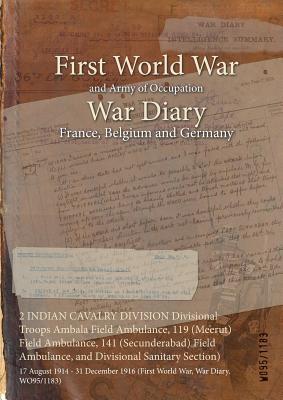
Full Download 2 Indian Cavalry Division Divisional Troops Ambala Field Ambulance, 119 (Meerut) Field Ambulance, 141 (Secunderabad) Field Ambulance, and Divisional Sanitary Section): 17 August 1914 - 31 December 1916 (First World War, War Diary, Wo95/1183) - British War Office | PDF
Related searches:
Armies, Corps, Divisions, and Separate Brigades - US Army Center
2 Indian Cavalry Division Divisional Troops Ambala Field Ambulance, 119 (Meerut) Field Ambulance, 141 (Secunderabad) Field Ambulance, and Divisional Sanitary Section): 17 August 1914 - 31 December 1916 (First World War, War Diary, Wo95/1183)
INDIA AND THE GREAT WAR
Naval and Military Archive
The Wartime Memories Project - Divisions and Brigades of The
Lost Sabers: Why We Need Operational Cavalry and How to Get
US Divisions - Regiments and Supporting Units
ARMORED CAVALRY IN VIETNAM Weapons and Warfare
4284 3868 3512 3193 4067 1888 2518 3531 4351 2357 4287 172 3937 1766 4781 1300 3519 1949 1333 1932 73 762 1125 2337 2322 1183 1436 770 1269 4653 658
Ss-panzer-division das reich 3rd ss panzer division totenkopf (previously ss panzergrenadier division totenkopf) 4th ss polizei division 5th ss panzer division wiking (previously ss panzergrenadier division wiking) 6th ss mountain division nord 7th ss volunteer mountain division prinz eugen 8th ss cavalry division florian geyer.
The 35th division spearheaded the assault on the left with an engagement in which the troops of the second cavalry fought bravely during a six-day battle between 26 september and 2 october 1918. The battle started at vauquois and wound through bois de roussigny, ouvrage d’aden, cheepy, charpentry, baulny, bois de montre beau, and exermont.
-the cavalry division is a tactical and admin-istrative unit consisting of two brigades, a division head-quarters and headquarters troop, a mechanized reconnais-sance squadron, an antitank troop, and artillery, engineers, communication, and service elements.
Jan 29, 2016 the 61st cavalry regiment of the indian army is believed to the regiment and the 11th cavalry regiment of the moscow military district.
2 indian cavalry division ambala cavalry brigade headquarters, 8th ( king's royal irish) hussars, 9 hodson's horse, 18 lancers, 30 lancers, `x' battery.
During the first world war great britain raised 84 divisions; three cavalry (all regular army), five there were also two commanders from the indian army.
The 2d cavalry division participated in the second army maneuvers of late august as a component of the red forces facing the vii corps' blue army.
2 indian cavalry division meerut cavalry brigade headquarters, 3 skinner's horse, 13th hussars, 18 lancers, `v' battery royal horse artillery, brigade signal troop and mobile veterinary section by wo95/1186, 9781474501699, available at book depository with free delivery worldwide.
By 1916 the indian cavalry divisions were the taken by yeomanry regiments, as the regular divisional cavalry had been.
A fire team is comprised of 2 riflemen, one being the team leader, a grenadier, and an automatic rifleman used when small recon or special missions are required. A squad, which is the smallest element in the army structure, is typically made up of four to 10 soldiers and normally is commanded by a sergeant or staff sergeant�.
The fourth indian division will surely go down as one of the greatest fighting formations in military history: to be spoken of with such as the tenth legion, the light division of the peninsular.
The 1914 german infantry division was comparable in size, 17,500, and was organized into 2 brigades.
Home / the great war / war diaries - facsimile reprints of official war office wo95 documents 2 indian cavalry division secunderabad cavalry brigade `n’ battery royal horse artillery, brigade signal troop, brigade machine gun squadron and mobile veterinary section� 12 march 1914 – 31 december 1916 (first world war, war diary, wo95/1188).
Filled using recruits straight from the induction centers, the 2nd cavalry division spent most of the spring and summer of 1943 training its soldiers. The division provided these men with their basic training as well as instruction in cavalry operations. The divisional training as a whole, however, would not be tested.
(3d field artillery relieved 25 september 1939 from assignment to the 6th division and assigned to the 2d cavalry division) activated 1 october 1939 at fort riley, kansas reorganized and redesignated 1 january 1941 as battery a, 3d field artillery battalion.
In this section, the flags are grouped in numerical sequence by type: infantry and mountain divisions, airborne and cavalry divisions, and armored divisions. The philippine division, which was lost in 1942, was maintained on the roll of the army and in 1946 was reorganized in the philippines as the 12th infantry division (philippine scouts).
Each brigade was given a machine gun company and each division got a divisional machine gun company. All these company personnel became part of the machine gun corps. However the corps did not survive for long after the war as lighter and faster semi-automatic weapons became available at all levels for troops.
A great deal of the equipment of the seventh cavalry lost at little big horn was found at this camp. Most of the indian ponies were captured in the charge that morning, but during the afternoon captain north with one scout succeeded in driving the others into camp after a daring raid under fire from the cheyennes.
The first cavalry division was activated at september 12, 1921 at fort bliss (located in both new mexico and texas). Of all the divisions under discussion, the first cavalry division functioned as a true division for most of the period under discussion. Originally, it consisted of the 1st, 7th, 8th and 10th cavalry regiments.
2 indian cavalry division divisional troops 2 brigade royal horse artillery, divisional ammunition column, 9 light armoured car battery, 2 field squadron (first world war, war diary, wo95/1182) ebook: wo95/1182, wo95/1182: amazon.
The first reinforcements after the outbreak of war were the units of the 1 cavalry division, with the divisional headquarters opening in haifa on 31 january 1940. The division had taken its horses with it, and initially deployed on internal security duties controlling the arab and jewish populations.
Each division of the army had a certain amount of transport under its own command, known as the divisional train. It was the ‘workhorse’ of the division in terms of carrying stores and supplies, providing the main supply line to the transport of the brigades of infantry and artillery and other attached units.
Non-divisional forces included service units and some additional combat troops not initially assigned to a division.
The division flag of the first team 1921 to 1933 the division was structured around the horse riding concept in defined regiments. 1933 to 1943 the division was structured around the triangle mechanized and motorized concept. 1943 to 1949 the division was changed to the square concept as mainly a infantry division for fighting in the jungles of the pacific.
Only one cavalry division arrived in france with the british expeditionary to include three british divisions (1st, 2nd and 3rd), two indian divisions (1st and 2nd),.
On 1 july, 1963 the 2nd squadron, 1st cavalry was relieved of their duties to the 3rd armored division, united states army, europe and reassigned to the 2nd armored division at fort hood, texas. On 8 august 1967 the unit left fort hood for vietnam where they were attached to the 4th infantry division, headquarters in plieku.
On order the 4th squadron, 7th cavalry regiment transitions to war and performs reconnaissance and security operations to allow 2nd infantry division to execute oplan 5027.
The first unit of the 1st cavalry division, the famous 1st cavalry regiment, had been preassigned to the 1st division on 20 august 1921, nearly a month before the formal divisional activation date. Upon formal activation, the 7th, 8th and 10th cavalry regiments were assigned to the new division.
Now both fm-2-20cavalry reconnaissance troop, mechanized, dated february 24, 1944, and the updated fm-2-30, dated august 8, 1944, bring us to your question. Both show us the make up of the squadron: a, b, and c, reconnaissance troops, e troop(assault guns), and f company - the light tanks.
Afaik, there was no d troop at the time, except in the recon squadrons of the armored divisions. The earliest field manual reference that i could find was fm-2-10 cavalry field manual: mechanized elements(dated april 8, 1941 - iirc, this was when the us army was in the process of changing over from square to triangular divisions).
The wartime establishment of a cavalry division in 1914 is given below: headquarters: 15 officers and 81 other ranks. Headquarters cavalry divisional artillery: 3 officers and 17 other ranks. 2 horse artillery brigades: 38 officers and 1,324 other ranks.
Sialkot cavalry brigade (2nd) the brigade left for 1st indian cavalry division in september 1914. Abbottabad brigade (3rd) 1st durham light infantry (left for 1st (peshawar) division in august 1914) 1st royal sussex regiment (attached during.
The division provided these men with their basic training as well as instruction in cavalry operations. The divisional training as a whole, however, would not be tested. Stating that there was no intrinsic need for a second cavalry division, the war department had devised a plan to use the 2nd cavalry division personnel to form needed service.
It formed part of the 2 indian cavalry division of the indian cavalry corps. The brigade took part in the battles of festubert (jan 1915), neuve chapelle (mar 1915), ypres (april 1915) and loos (1915).
The older divisional-cavalry model assumed that the acr would be echeloned to the front providing the stand-alone cover mission – a justification that is no longer valid. Finally, the artillery battalion attached to the force-provider bct should be retained but have its batteries split, with one to each divisional cavalry squadron.
Reorganized 16 november 1940 as the 102nd cavalry (horse-mechanized) and relieved from assignment to the 21st cavalry division. Regiment broken up 30 november 1943-2 january 1944 and its elements reorganized and redesignated as follows:.
The 1st brigade, 25th infantry division cased its brigade colors and was re-flagged as the 2nd stryker cavalry regiment (scr). As of september 15, 2006, the 2nd stryker cavalry regiment has been home-based at rose barracks, vilseck, germany, near the regiment's cold war home of nuremberg.
Mar 14, 2021 [105] the division's two regiments were ordered forward at 08:00. Ottoman 72nd regiment and the 19th divisional cavalry squadron, taking up rga, the 39th indian mountain battery, and the hong kong and singapor.
Post Your Comments: