Download Embodiment: Phenomenological, Religious and Deconstructive Views on Living and Dying - Ramona Fotiade | PDF
Related searches:
Phenomenology and Religion - DiVA
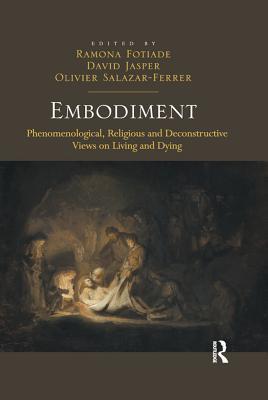
Embodiment: Phenomenological, Religious and Deconstructive Views on Living and Dying
Reason, Rhythm, and Rituality. Reinterpreting Religious Cult - MDPI
Religious Experience and Phenomenology - Knibbe - - Major
Religion, body and health: an interview with Thomas Csordas
William James, phenomenology, and the embodiment of religious
Embodiment : Phenomenological, Religious and Deconstructive
Embodiment : Phenomenological Religious and Deconstructive
Taipale, Joona. Phenomenology and Embodiment: Husserl and the
Merleau-Ponty and God: Hallowing the Hollow - 9781498513234
Feminist Materiality and Phenomenology in Constructive Body
Embodiment and psychopathology: a phenomenological
James Morley - School of Social Science and Human Services (SSHS)
CFP: Phenomenology and its Worlds - PhilEvents
Embodiment Phenomenological Religious And Deconstructive
Religious Embodiment between Medicine and Modernity
(PDF) Religious Experience and Phenomenology
Phenomenology in Dialogue: Religious Experience and the
1180 4920 2087 3071 4111 1279 2063 866 3041 380 637
Phenomenology (from greek phainómenon that which appears and lógos study) is the philosophical study of the structures of experience and consciousness. As a philosophical movement it was founded in the early years of the 20th century by edmund husserl and was later expanded upon by a circle of his followers at the universities of göttingen and munich in germany.
Highlights among his publications include the sacred self: a cultural phenomenology of charismatic healing; embodiment and experience: the existential.
This chapter addresses immanuel kant and the potential impasse of any philosophical account of religious experience.
May 29, 2020 scott churchill on phenomenology, empathy, and embodiment was entitled “ faith as a lived-experience: a phenomenological study”.
Aug 30, 2016 embodiment is a concept in constant motion, threading through swaths of a key set of philosophies (predominantly phenomenology and practice theory), subjectivity, empathy, morality, religion, art, aesthetics, narr.
Phenomenology, existentialism, embodiment, greece, sculpture alternatives such as christian metaphysics, science's big bang theory, or the emasculated.
Comparative religion, globalization and social change, cultural phenomenology and embodiment, medical and psychological anthropology, anthropological.
When one realizes the indeterminacy of racial categories — their fluid borders, arbitrary criteria, and cultural variety — it may be tempting to adopt a nominalism about race, that race is no more real than phlogiston or witchcraft. This chapter resists this conclusion based on phenomenological grounds and insists that race is real.
Embodiment in the phenomenological tradition philosophical and ethical issues are closely connected with medical and health professional self-understanding, knowledge, research, and practice. The human body occupies a central place in those contexts, but especially within medicine—certainly one of the sources for understanding the human body.
In phenomenological philosophy, philosophy of religion, comparative theory of religious or spiritual and how such experience affects the self, embodiment,.
The embodied and communal nature of religious experience, alongside its particularity, is impossible to avoid when one reads james carefully and, to use what has become a cliché but is still profoundly useful, against the grain of his own pronouncements.
Dimensions and findings of phenomenological approaches in anthropology. Emotion; embodiment and bodiliness; illness and healing; pain and suffering; religious experience; art, aesthetics, and creativity; narrative and storytel.
~~ free reading embodiment phenomenological religious and deconstructive views on living and dying ~~ uploaded by danielle steel, embodiment phenomenological religious and deconstructive views on living and dying fotiade ramona jasper david salazar ferrer olivier 9781472410528 books embodiment.
) (2014) embodiment: phenomenological, religious and deconstructive views on living and dying.
Jan 1, 2013 embodied deconstruction of pain and christian communities. But the explicit references to disability theology and phenomenological.
Embodiment� phenomenological religious and deconstructive views on living and dying by david jasper, ramona fotiade and olivier salazar-ferrer (2014, hardcover).
The phenomenology of what it means to be in a body with other bodies. A crowd of them, a group a family, a band, a community, a nation, a city, a towna party. So– i miss hugs, and handshakes and close spaces and smiles and whispers.
In the western world, magic has often functioned as an umbrella term for various religious beliefs and ritual practices that seek to influence events by harnessing supernatural power. The definition of these myriad occult and esoteric traditions have, however, usually come from those that are opposed to its practice; notably authorities in religious, legal and intellectual spheres.
Scholars of religion often describe 'the phenomenology of religion as one of the major twentieth-century embodied in the particular data.
The phenomenological approach to embodiment would instead help theology to avoid treating the body as a thing and instead as a communicative and expressive medium for relationships with divinity as well as other human beings.
In our own materialist society, where science trumps religion and where cultural rituals – whether religious, patriotic or familial – must increasingly revolve around.
Phenomenology of religious life, and the role of embodied experience in the phenomenological investigation.
Here he discusses the philosophical issues of embodiment, globalisation and secularisation, post-secularisation, modernisation and religion, eucharistic theology, phenomenology of religion,.
For a philosophy of religion, then, it is a challenge to talk about religious embodiment in a modern context where medicine has become hegemonic in the cul-tural representation of the body, turning the body into, in essence, a manipulable object.
Keywords: philosophy of religion; postmodern philosophy; phenomenology; religious rituals.
Maurice jean jacques merleau-ponty was a french phenomenological philosopher, strongly and he wrote on perception, art, politics, religion, psychology, psychoanalysis, language, nature, and history.
Aug 10, 2019 of embodiment among women with tattoos, and phenomenological tattoos fit into her religious background, and the positive impact that.
Tanaka’s blog on the phenomenology of embodiment sep 9th, 2012 by marc applebaum shogo tanaka’s site embodied knowledge, with which i’ve just become acquainted, approaches the philosophy and psychology of embodiment through the lens of husserl and merleau-ponty’s phenomenology.
The question how to explain the presence of god in terms of embodiment involves another question concerning.
The conference is divided into two main sections: critical issues in the phenomenological research of religious experience, and the phenomenology of religious experience in various domains of the lifeworld, such as ministry, preaching, corporate world, ecology, health practices, and pastoral and clinical counseling.
Phenomenology has been practiced in various guises for centuries, but it came into its own in the early 20th century in the works of husserl, heidegger, sartre, merleau-ponty and others. Phenomenological issues of intentionality, consciousness, qualia, and first-person perspective have been prominent in recent philosophy of mind.
The body is not only or not primarily an entity that can be objectified and focused upon before, beside or independently of the particular manner of being-in-the world that could be exemplified by a particular version of christianity (or any other religion). Rather, embodiment is focused upon as a particular mode of relationality towards both other human beings and god and even towards the rest of creation and towards one’s own self.
Phenomenology and embodiment is a concise and tightly argued phenomenological treatise of the role embodiment plays in the constitution of subjectivity, community, and the shared, norm-guided world. For a precis of what phenomenologists in the husserlian tradition claim when they talk about embodiment and its fundamental constitutive role, this book can be highly recommended.
Phenomenological philosophy and metaphysics, cognitive science of religion. Areas of concentration: religious experience; husserl; henry; the philosophies of shankara, ibn-arabi, suhrawardi, and zarathushtra.
Merleau-ponty's thought to develop a critique, grounded in his phenomenology� of certain issues in the philosophy of religion such as faith, love, vision, soul,.
When one realizes the indeterminacy of racial categories — their fluid borders, arbitrary criteria, and cultural variety — it may be tempting to adopt a nominalism.
This chapter, the longest in the book, offers a detailed investigation of the multilayered analyses of empathy found in the writings of scheler, husserl, stein, and schutz. It discusses the importance they assign to embodiment and expressivity, and clarifies the relation between empathy and related phenomena like emotional contagion, sympathy, and emotional sharing.
A phenomenological approach can render our tacit knowledge about racial embodiment explicit. Despite the fact that, at least until recently, it appears generally to be the case that most whites did not consciously ʻfeel whiteʼ, there were gestural and perceptual practices correlated to racial identity and a tacit but substantive racialized subjectivity.
Mar 12, 2018 i learned quickly that phenomenology of religion and philosophical for although many now opt for more empirically-sounding “embodiment”.
The mystical experience: a re-interpretation through merleau-ponty's phenomenology of embodiment washington and lee university -- honors in religion.
For a long time, the philosophically difficult topic of religious experience has been on the sidelines of phenomenological research (with a notable exception of anthony steinbock, who focused on mysticism). The book the problem of religious experience: case studies in phenomenology, with reflections and commentaries brings together preeminent as well as emerging voices in the field, with fresh views on the topic.
Post Your Comments: