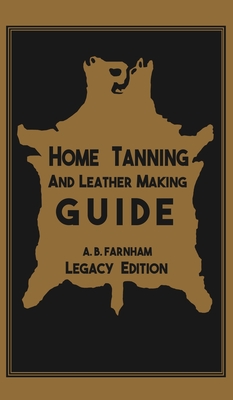
Download Home Tanning And Leather Making Guide (Legacy Edition): The Classic Manual For Working With And Preserving Your Own Buckskin, Hides, Skins, and Furs - Albert B Farnham | ePub
Related searches:
Home Tanning And Leather Making Guide (Legacy Edition): The
Home Tanning And Leather Making Guide (Legacy Edition): The Classic Manual For Working With And Preserving Your Own Buckskin, Hides, Skins, and Furs
Home Tanning and Leather Making Guide: Farnham, Albert Burton
Amazon.com: Home Tanning And Leather Making Guide (Legacy
Home Tanning and Leather Making Guide (1922): A Book of
Home Tanning And Leather Making Guide (Paperback) - Doublebit
Amazon.com: How To Tan Hides And Make Leather Home Tanning
Home Tanning and Leather Making Guide (Legacy Edition) : The
Amazon.com: Customer reviews: Home Tanning And Leather Making
Home Tanning and Leather Making Guide - A Book of Information
9780936622118 - Home Tanning and Leather Making Guide by
Home Tanning and Leather Making Guide: A Book of Information
Home Tanning and Leather Making Guide - Albert C. Farnham
home tanning and leather making guide-The Snare Shop
How To Tan Hides And Make Leather Home Tanning And Leather
Brains and Battery Acid, part 1 - Althaea Sebastiani
Skinning and Tanning the Indian Way - SkyAboveUs
Harding's - Home Tanning and Leather Making Guide
Home Tanning and Leather Making Guide by Albert B. Farnham
Home Tanning of Leather and Small Fur Skins by R. Frey
The Ancient History of Leather Making Sofas and Sectionals
How is Leather Made: Step by Step Process on Tanning and Finishing
Home tanning and leather making guide (A B Farnham) the
Home Tanning And Leather Making Guide (legacy Edition): The
A Review of Tanning, Leatherworking and Skin Related Books in
How to Tan Hides Using Traditional Cheap and Easy Methods
home book of taxidermy and tanning-The Snare Shop
Ultimate Guide to Skinning and Tanning: A Complete Guide To
250 Tanning hides and leather work ideas tanning hides
Tanning and Leather Finishing - ILO Encyclopaedia
195 2216 3236 140 3160 1897 3359 3443 3465 269 876 3033 3123 4993 1722 3863 3785 1895 1401 3365 3304 386 1296
Farnham a book of information for those who wish to tan and make leather from cattle, horse, calf, sheep, goat, deer and other hides.
And a great selection of related books, art and collectibles available now at abebooks. 9780936622118 - home tanning and leather making guide by farnham, albert b - abebooks.
Start by setting up a work area for yourself, preferably outdoors or in a well-ventilated, easily cleaned indoor area. Soak the hide in a bucket of water overnight to make it more pliable.
Farnham: this guide has some useful information, but leaves something to be desired as a stand alone guide to tanning. It is still one of the better references for vegetable tanning and well worth taking advantage of, all the more so, because it is out of copyright and can be download from tanning.
Using oak bark tea as a hide tanning agent is the prime method of choice by tanners who want a thick and durable leather that can be used to make gun holsters, belts, and horse tack. • collect enough bark to fill a 5 gallon bucket – several 5 gallon buckets if doing a large hide.
1 general 1-4 leather tanning is the process of converting raw hides or skins into leather. Hides and skins have the ability to absorb tannic acid and other chemical substances that prevent them from decaying, make them resistant to wetting, and keep them supple and durable.
Nubuck and leather are not different because they are both leather. Nubuck is a type of leather that has had the grain brushed and polished, but not proces nubuck and leather are not different because they are both leather.
Mar 15, 2017 of hide skinning are the rabbit pelts that you find at craft stores. Soft, tanned leather is usually called buckskin, and it is usually for home tanners because the only tanning agent needed iswell, tips.
Apr 19, 2016 a witch's guide to at home leather tanning methods. From the hide, rendering it skin this is done as part of making rawhide and leather.
Haphazard self-tanner applications may fade, but the pictures will live on instagram forever. Follow these steps to score a faux glow that looks natural, thanks to prep steps, application tips, and product recommendations from experts.
A comprehensive guide for tanning, leatherwork, and buckskin preservation. Farnham’s home tanning and leather making guide is full of old-time tips and methods for preserving and working your own leathers, buckskin, and furs. Originally published in 1922, this handy little guide touches on every aspect of the fur and leather making process, with a focus on homemade and handcrafted preservation techniques used by native americans, trappers.
Oct 4, 2020 rabbits reproduce well, grow fast, eat food you can grow yourself, and produce manure for the garden.
The ancient craft of turning skin into leather by natural means, perfected over hundreds of years of use from europe to australia, has lost popularity as it is replaced by cheaper, more modern methods. However, natural vegetable tanning, as this process is called, remains one of the best known methods of producing leather.
After tanning, the inside of the hide was again rubbed with fat, pulled taut using the preferred method, and then worked over again with a rounded stick or rock. Of course, many hands make light work and, in most tribes, women worked together.
If done properly, the skin is turned into leather with the fur firmly attached to the skin. A professionally tanned pelt will last decades if cared for properly.
Restoring a leather piece to its former glory can take a bit of work, but it's well worth the effort. Whether you want to do some sofa repairs in leather or fix your favorite jacket, you can remove dirt and patch holes with just a few basic.
Pick something that is smaller and simple to make, so you can find out if you like leather working before you make a large investment. If you're having troubling thinking of a project here's a few suggestions: a wallet, a card holder, a watch strap, a journal cover, a bracelet, a sunglasses case, a belt, or a dog collar.
Nov 19, 2020 - explore charlotte brunson's board tanning hides and leather work, followed by 105 people on pinterest.
This vintage book contains a complete guide to tanning leather, with information on tools and equipment, required materials, different techniques, benefits, common problems, and many other related aspects. Easy-to-digest and full of invaluable tips, this handbook is highly recommended for novice.
Nov 1, 2017 cowhide rugs are can be a beautiful addition to any home, but did you know that it is a true artisanal craft to create these rugs? you can chrome tanning is the most common commercial method used for leather tanning.
Fleshing the hide is the process of scraping off the flesh and fat, which prevents the hide from rotting. Place the hide on a fleshing beam (a beam designed to hold the hide in place as you work) or on a tarp on the ground. Use a fleshing blade to scrape off all visible traces of flesh and fat using quick, strong strokes. Flesh the hide immediately after cutting the hide from step 2, wash the hide. Use clean water and soap made from natural substances to wash away.
Nov 8, 2020 generally, leather production involves three stages: preparing, tanning, and crusting. First, the piece of leather is prepared for the tanning process.
Following are the steps for tanning with bark from a 1884 us department of agriculture publication, “home tanning of leather and small fur skins,” as summarized at the backcountry chronicles website: make bark liquor — 30-40 pounds of finely ground (particles no larger than corn kernel) oak or hemlock bark.
Similarly, a moose or caribou skin can be home-prepped and then sent to a these instructions can apply to tanning the skin of virtually any big-game extract the brains from the underside of the skull by creating an enlarged openin.
How to tan we earn a commission for products purchased through some links in this article. Ok, time to improve our homer j simpson understanding of radiation safety.
Harding's - home tanning and leather making guide rating required select rating 1 star (worst) 2 stars 3 stars (average) 4 stars 5 stars (best) name.
This title is a comprehensive guide on the subject and provides valuable information for those who wish to tan and make leather from cattle, horse, calf, sheep, goat, deer and other hides and skins. It also explains how to skin, handle, classify and market the hides.
After the initial tanning process, the leather is cut into various thicknesses as required by the leather craftsmen. Being a highly automated process, this kind of leather is popular and costs less than more labor-intensive tanning methods.
Aug 5, 2019 leather manufacturing does have a big environmental impact. There is very heavy use of polluting chemicals, like chromium salts, in the tanning.
Natural dyes made from vegetable extracts create the desired colors or waterproofing. Leather tanning uses a lot of water but the waste water from vegetable tanning is easy to purify and safely returned to the environment.
A couple of hours before you plan to tan, soak the dried skins in clear, fresh water until flexible.
The tanning process evolved with time until turning, during the middle ages, into a craft. Most towns and villages had a tannery, situated on the local stream or river.
Information on how to tan and make leather from cattle, horse, calf, sheep, goat, deer and other hides.
Find out about the different types of tanning with this handy guide.
It must be surprising, but it is quite possible to tan leather by yourself. The article will help you with the brain tanning technique that is used to tan leather.
At this point, instructions on brain tanning hides often jump into the preparatory steps leading to the final.
Check out these 10 tips to convince everyone your spray-on tan is real, and make your glow look all-natural with this essential guide.
Leather thickness conversion; parts of the hide; sizes of cuts; waste and scrap leather; vegetable vs chrome tanned leather; thread sizes; stitch sizes.
Buy home tanning and leather making guide - a book of information for those who wish to tan and make leather from cattle, horse, calf, sheep, goat, deer.
The dermis is used to make leather after the other layers have been removed using chemical and mechanical means. The tanning process uses acids, alkalis, salts, enzymes and tanning agents to dissolve fats and non-fibrous proteins and chemically bond the collagen fibres together.
It's likely that ancient people discovered animal hides that were tanned naturally by decaying plant material.
The reason for tanning leather is to change the skin or hide’s protein structure. Tanning arrests the decaying process and changes the skin into leather. Once tanning is complete, the leather can be used to create a wide variety of leather goods. The skins or hides of domestic animals generally make the best leather.
Since the process uses natural materials to tan the leather, the color is typically a light tan or brown. Veg tanned leather as it’s more commonly called is a great leather for tooling, stamping, molding, and all around custom leatherwork.
Some tips on preparing bison hides! raw skins that are tanned as robes or rugs require special care before processing.
• pour the brain tanning solution into your food processor or blender and his pulse for about 30 seconds to 1 minute. • repeat the same coating and stretching steps outlined above. Before the leather is completely dry after brain tanning the hide, you must being to “break” the membranes or work the hide.
We are a family owned and operated business that have been making leather goods since 1904. We have a vast selection of leather goods ranging from deerskin mittens/gloves, accessories, gun cases, and garments.
Post Your Comments: