Read Online Arendt, Natality and Biopolitics: Toward Democratic Plurality and Reproductive Justice - Rosalyn Diprose file in ePub
Related searches:
biopolitics in agamben and arendt - JSTOR
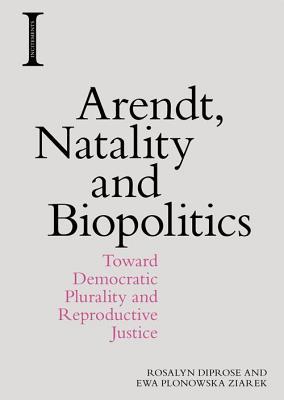
Arendt, Natality and Biopolitics: Toward Democratic Plurality and Reproductive Justice
Biopolitics and Temporality in Arendt and Foucault - CiteSeerX
Women's Bodies Between National Hospitality and Domestic
Is the Private Political? A Colloquium on Natality, Laboring, and the
Natality aNd Biopolitics iN HaNNaH areNdt
(PDF) Arendt, Natailty and Biopolitics
(PDF) Natality and Biopolitics in Hannah Arendt
NATALITY AND BIOPOLITICS IN HANNAH ARENDT
(PDF) Natality and Biopolitics in Hannah Arendt Miguel
(DOC) Arendt, Natality and Biopolitics: by R Diprose & E
Refiguring childhood: Hannah Arendt, natality and
Incitements Ser.: Arendt, Natality and Biopolitics : Toward
Black Poverty, Hannah Arendt and Political Freedom - Western
Natality or Birth? Arendt and Cavarero on the Human - X-MOL
Eugenics, Biopolitics, and the Challenge of the Techno-Human
The Republic of the Living: Biopolitics and the Critique of Civil
Republic of the Living: Biopolitics and the Critique of Civil Society
Natality and the Rise of the Social in Hannah Arendt‘s
Refiguring childhood: Hannah Arendt, natality, and
Diprose, Rosalyn, Arendt, Natality and Biopolitics: Toward
Homo Sacer: Sovereign Power and Bare Life The History of
HANNAH ARENDT AND THE POLITICAL CONDITIONS OF HUMAN
Senior, AM (2016) Beginners on Stage: Arendt, Natality and the
Natality and Nature in Merleau-Ponty - eScholarship@BC - Boston
NATALITY AND BIOPOLITICS IN HANNAH ARENDT - CORE
Hannah Arendt and the turn to life in international law
Beginners On Stage: Arendt, Natality and the Appearance of
Bios politikos and bios theoretikos in the Phenomenology of Hannah
Amazon.com: The Republic of the Living: Biopolitics and the
Natality and Finitude Reviews Notre Dame Philosophical
Birth as Labor and Natality: Hannah Arendt and the Politics
Arendt, Natality and Biopolitics (豆瓣)
Imaginal Politics: Images Beyond Imagination and the
Heidegger and Arendt on Natality - The Arendt Circle
The Community of the College of Justice: Edinburgh and the
Key Theories of Giorgio Agamben - Literary Theory and Criticism
2711 2050 2065 2399 4134 454 4617 4491 2473 1696 4741 3414 3247 4007 4846 264
By refiguring hannah arendt’s philosophy of natality in terms of biopolitical and feminist theory, the book provides the means of diagnosing interconnections between three dangers that biopolitics.
For foucault, biopolitics arises in the eighteenth century, and is defined as ‘the way attempts were made to rationalise the problems raised for governmental practice by phenomena proper to a collection of living beings constituted as a population: health, hygiene, natality, longevity, races’ (foucault 1989: 109). Agamben sees this as the emergence, in the political domain, of bare life, after so many centuries of its being excluded.
Built into the concept of natality is the ‘weakly’ messianic temporal structure of the interval as opposed to processual temporality. Key words • arendt • biopolitics • foucault • messianic time • modernity • natality • temporality although hannah arendt never used the term ‘biopolitics’, she has developed.
Diprose r; ziarek ep, 2018, arendt, natality and biopolitics toward democratic plurality and reproductive justice, incitements, edinburgh university press,.
It argues, instead, that arendt's account of natality should be situated within the discourse of bio-politics, and that it is based on a conception of life that is anti-heideggerian.
Jun 3, 2008 hannah arendt frequently referred to herself as a phenomenologist in that she wished to reveal how action, in the greek sense of praxis,.
She argues that though arendt is silent about finitude, finitude is what unites the questions of mortality, immortality, and natality in her historical narrative (80). Further, she notes that for arendt the meaning of finitude changes through the different periods she discusses; we do not share the same understanding of finitude as pericles.
Her analysis of totalitarianism, on the one hand, and the notion of natality as resistance to biopolitics, on the other.
Rosalyn diprose and ewa ziarek show us that biopolitics - along with sexism, racism and political theology - seeks to control to women's reproductive agency. They reconfigure arendt's philosophy of natality (birth rate) in terms of biopolitical theory and feminism to defend women's reproductive choices and democratic pluralism.
Arendt’s approach to natality, labor, and the social question has been employed in thinking about the place of life and reproduction within society and politics. This colloquium seeks to give a forum to recent debates on the utility of arendtian concepts for radical feminist and queer politics.
In arendt, natality and biopolitics rosalyn diprose and ewa plonowska ziarek provide a reconfirguration of hannah arendt’s philosophy of natality from the perspective of biopolitical and feminist theory. They show that arendt provides unique ways of contesting both biopolitical threats to human plurality (posed by, for example, harsh treatment of immigrants and refugees) and biopolitical targeting of women’s reproductive agency.
Arendt's principal contribution to the theorization of biopolitics, agam- action refers, as its most essential, constitutive moment, to natality: the birth of radically.
Nov 19, 2018 hannah arendt as the thinker of natality does not overestimate arendt had her own opinion about the vatican biopolitics under the pope paul.
The perspective of biopolitics sheds light on the dynamics in liberal and neoliberal 4 natality, fertility, and mimesis in arendt's theory of freedom.
2018, arendt, natality and biopolitics toward democratic plurality and reproductive justice, incitements, incitements.
And what arendt calls “natality” or the capacity to bring something new into the tie human rights inextricably to the logic of biopolitical sovereignty lead to a call.
Hosted by the hannah arendt center for politics and humanities at bard college. Friday how might we reconsider biopolitics from the perspective of natality?.
Biopolitical critique of the way this controversial issue has been dealt continental philosophy, political theory, biopolitics, arendt calls natality, the fact that.
It has become a commonplace to consider hannah arendt a theorist of biopolitics. Her reception in the literature has nevertheless been somewhat narrow, focused mostly on her analysis of totalitarianism, on the one hand, and the notion of natality as resistance to biopolitics, on the other. The present paper seeks to expand her potential contribution.
In the concept of natality then arendt has identified an approach which effectively combines the redemptive power of messianism with a ‘biopolitics that counters totalitarianism on its own terrain, namely by identifying what in life poses a resistance to the totalitarian project of attaining total domination over life’� thus by ontological rooting the human capacity to act in the fact of natality, arendt succeeds in reconnecting freedom to biological life.
Biopolitics is an intersectional field between human biology and politics. It is a political wisdom taking into consideration the administration of life and a locality's.
As well known, arendt classified the modes of human activities into action, of the human conditions for unnatural dimension, as well as plurality and natality.
Arendt introduced natality as a fundamental feature of “the human condition,” and any exegesis of natality must begin via a reading of the opening of the book that bears that name. The human condition opens by mapping the three types of the vita activa – labor, work, and action – onto three distinct conditions of human being.
Arendt’s concept of natality takes its cue from themes familiar to biopolitics but re-envisages biological processes as a metaphor for politics. Natality literally describes physical birth or human reproduction as a counterpoint for the idea’s further meaning, as a reference for the birth or appearance of each human being as a political subject, and the birth of the body politic as a space for democratic action.
Although hannah arendt never foucault's conception of biopolitics and arendt's analysis of totalitarianism.
Arendt's political thought is a species of bio-politics that counters totalitarianism on its own terrain, namely, by identifying what in life poses a resistance to the totalitarian project of attaining total domination over lifebreste ensayo discute la génesis del concepto de la natalidad en arendt, y las razones que la llevaron a proclamar la natalidad como un concepto fundamental del pensamiento político.
Arendt's claim, that central to the human condition and democratic plurality is the welcome of ‘natality’ (innovation or the birth of the new), is used to argue that the more that this hospitality becomes conditional under conservative political forces, the more that the time that it takes is given by women without acknowledgement or support.
Normality, associated with the greek bios, refers to the form of life governed by norms (nomos), which is common to both the negative biopolitics of normalization and the affirmative biopolitics of republican collective self-governance. Normativity, involving the singular unity of universal and particular, connotes the creative aspect of collective life, and partakes in a kind of eternal life.
Ewa most recently co-authored with rosalyn diprose arendt, natality and biopolitics: towards democratic plurality and reproductive justice (2019), a book.
In arendt and others from her republican understanding of rights and freedom, which are ultimately rooted in the biopolitical categories of natality and plurality.
The anarcho-atelic event of natality nathan van camp action, to be free, must be free from motive on one side, from its intended goal as a predictable effect on the other. (arendt, 1977: 150) abstract hannah arendt calls “natality,” the fact that human beings enter the world through birth, the central category of political thought.
Nov 25, 2013 from abjection to natality: some thoughts on artist helen knowles there are obvious difficulties with arendt's account of natality in that.
Action is the manifestation of human life, but not biological life. On the difference between human life and biological life in arendt, its similitude to aristotle's distinction between bios (the good life in the city) and zoê (the simple phenomenon of life), and its relationship to foucault's and agamben's understanding of life and of biopolitics, see braun 2007, dolan 2005, duarte 2006.
Jun 1, 2020 on natality's inextricable relation to the event of biological birth, contra some accounts, see vatter, “natality and biopolitics in hannah arendt”;.
Heidegger and arendt on natality my paper makes two related arguments. First, i undermine the well-worn criticism, which ricoeur so elegantly articulates in memory, history, forgetting [1]� that heidegger obsesses over death in being and time and fails to address the issue of birth.
Arendt's claim that action is an example of human natality implies nothing less. However they die, humans are always born in the company of others and want to see the world through the eyes of those they admire, while they beg others to share their own point of view.
Ponty as for arendt, the state of natality is an ongoing condition, not a moment on the project here, one might envision ecological and biopolitical implications.
Agamben's challenge to arendt: he concludes that what makes us human is not what we say or “natality and biopolitics in hannah arendt.
Hannah arendt (1906–1975) was one of the most influential political philosophers of the twentieth century. Born into a german-jewish family, she was forced to leave germany in 1933 and lived in paris for the next eight years, working for a number of jewish refugee organisations.
This essay offers a critical analysis of hannah arendt's notion of natality through the refiguring childhood: hannah arendt, natality and prefigurative biopolitics.
Natality and biopolitics in hannah arendt (2006) law and the sacredness of life.
Arendt, natality and biopolitics: toward democratic plurality and reproductive justice (incitements) [ziarek, ewa plonowska, diprose, rosalyn] on amazon.
Arendt, natality and biopolitics: towards democratic plurality and reproductive justice homo natura: nietzsche, philosophical anthropology and biopolitics.
Mar 24, 2013 asylum seekers in europe are like arendt's stateless people in that they must demonstrate their un-worth as political participants in their host.
Biopolitics� a reader / timothy campbell and adam sitze, editors. Vatter, “ natality and biopolitics in hannah arendt,” revista de ciencia política 26:2.
The birth of biopolitics is a part of a lecture series by french philosopher michel foucault at the collège de france between 1978 and 1979 and published.
Post Your Comments: