Download Religion, Conflict, and Stability in the Former Soviet Union - Katya Migacheva file in ePub
Related searches:
Religion, Conflict, and Stability in the Former Soviet Union
The Role of Religion in Conflict and Peacebuilding The
Italy, the Renaissance, and Religious Conflict Huntington Theatre
Stability in the Middle East: The Range of Short and Long
Stability in the Middle East: The Range of Short and Long-Term
Conflicts Colliding in Mali and the Sahel
Religious Conflict in Nigeria: Religion and the Nigerian
Faith and Conflict: The Global Rise of Christianity Pew
THE ROLE OF RELIGION IN CONFLICT AND PEACE - BUILDING
Ethnicity, Religion, and Conflict in Ghana: The Roots of Ga
Religion and the Israel-Palestinian Conflict: Cause
RELIGION, CONFLICT, AND PEACE PROCESSES
Religion, Peacebuilding, and Social Cohesion in Conflict-affected
Religion and Peacebuilding - United States Institute of Peace
Religion in World Affairs: Its Role in Conflict and Peace United
Research Databases - Religion and Conflict - LibGuides at Arizona
Religion and Conflict - Luc Reychler - George Mason University
Religion and Politics: Integration, Separation and Conflict - Irénées
Religion, Conflict, and Stability - Silk Road Studies
Religious Homogamy, Marital Conflict, and Stability in Same
Religion, Conflict, and Resolution
United States Strategy to Prevent Conflict and Promote Stability
Gale Academic OneFile - Document - Religion among the Kurds
Religion, Conflict and Dialogue - New Solutions to Global Conflicts
Mapping the Terrain: The Role of Religion in Peacemaking
Religion and Conflict in Modern South Asia
Religion, Conflict, and COVID-19
Conflict in Myanmar Religion and Public Life at Harvard
Bureau of Conflict and Stabilization Operations - United
Sectarian conflicts in the Middle East can be resolved Iraq
Religion and Politics Internet Encyclopedia of Philosophy
The Functionalist Perspective on Religion Boundless Sociology
Religious Sources of Conflict and Cooperation in - eScholarship.org
Democracy and ethno-religious conflict in Iraq - econstor
Religion and Conflict Beyond Intractability
Ethno-Religious Conflicts in Nigeria: Causal Analysis and Proposals
Religious Movements, Militancy, and Conflict in South Asia - AWS
Religion and Human Security in Africa - 1st Edition - Ezra Chitando
Religion and Conflict in Modern South Asia: Gould, William
Why Religion Matters Even More: The Impact of Religious
A History of Identities, Violence, and Stability in Nigeria
The Role of Religion in Post-Conflict Syria
Mauritania's Precarious Stability and Islamist Undercurrent
Religion, Law and Social Stability in Australia by Michael Quinlan
Egypt: The Religious Root of Conflicts in the Middle East Pulitzer
THE IMPACTS OF RELIGIOUS DIVERSITY ON HUMAN SECURITY
Religion and International Affairs: Faith, Conflict and Governance
Relationship between Religious Beliefs, Social Change and
(PDF) Religion, Conflict and Education - ResearchGate
Religiously based civil unrest and warfare
The Influence of Religion on Health - Inquiries Journal
In Guatemala, Religion and Tradition Conflict with Family
(PDF) Ethno-Religious Crisis as a Threat to the Stability of
Causes of Conflicts and Political Instability in Nigeria
Resolving conflict within the cultural dimension
The Conflict Perspective on Religion Boundless Sociology
Religion and Conflict Resolution
Chapter 13 - Religion, Culture and Conflict CourseNotes
Religion and Conflict in Medieval and Early Modern Worlds
The Religious Root of Conflicts in the Middle East - The
Religion and Globalization: New Possibilities, Furthering
(PDF) Religious conflict: Definitions, problems and
Religion and Conflict Transformation edX
The Three Main Sociological Perspectives
Spirtuality, Religion and Human Conflict – Groundviews
About religion: why it started and how it evolved
Sunni v Shia: why the conflict is more political than religious
1583 1799 3454 2471 4098 1532 3403 2107 1775 2719 524 3554 880 1552
Elections are likely to stir up ethno-religious conflicts in the future, if democratic institutions are not designed to foster moderation and compromise.
With religion a latent source of conflict, a triggering event can cause the conflict to escalate. At this stage in a conflict, grievances, goals, and methods often change in such a way so as to make the conflict more difficult to resolve.
According to joshua and brown (2001) in their study religious homogamy, marital conflict, and stability in same-faith and interfaith jewish marriages were they examine if a positive correlation.
The conflict today is over access to opportunities, civil rights, and political influence. But religion and religious history are the banners beneath which the opposing sides march. Religious fundamentalism� in the world of the late 1990s, religious leaders and millions of their followers are seeking to return to the basics of their faith.
Religion’s failure comes from and points to, the failure of dogma, or humanistic applied definitions in the teachings of each religion. The conflict arises from argued and fractured renderings of conservative orthodoxy instruction through adapted modern world views of the offshoot denominations contained within.
Is commonly called ‘religion’ and what that entails, essential to any analysis of whether features of this phenomenon matter in triggering, averting, or mitigating conflict, and if so, which ones. Most commonly, religion is understood to be a system of beliefs.
In guatemala, religion and tradition conflict with family planning. Security and stability of many of the countries we work in around the world.
Faith-based communities and marginalized groups, respect for human rights goal is to help countries move from fragility to stability and from conflict to peace.
Religion, however, can play an important role in peace-making and conflict prevention and resolution. Religion connects with peace in four major ways: the ideas of human dignity and the common humanity of all, derived from the notion that all are created in the image of the divine, are foundational to true peace.
Feb 27, 2021 nigeria: implications and options for peace and stability order the transformative conflict mediation in multi-faith schools in south africa.
The role of religion in conflict and peacebuilding has all too often been depicted in binary terms: it is seen as a source of either violence or reconciliation. This simplification obscures the complexity of the subject and shows that there is no common understanding of the central terms of the debate.
Jun 25, 2018 our most pressing peace and security challenges in the middle east are a clear reflection of the rifts, pressures, neglect and long-term trends that.
The military campaign has resulted in a humanitarian crisis and fears of regional instability. A path forward will require international cooperation, careful diplomacy, and an inclusive political.
The kurdish propensity for tolerance is a key element in their desire for an independent political system and is a primary reason for their conflict with the various.
Also, because religious texts are often ambiguous, divisions developed within religions. Different denominations, schools, or traditions have derived different meanings from the same religious texts. Thus were laid the foundations for millennia of inter-religious and intra-religious conflict.
While acknowledging the role of religion in provoking conflict, daniel philpott, professor of political science at the university of notre dame and coauthor of god's century: resurgent religion and global politics, argues that religious leaders have a critical role to play in negotiating societies' transitions from conflict to postconflict.
A publication from the rand corporation shares the findings of a study on “religion, conflict, and stability in the former soviet union. ” the report states that, while sometimes used to mobilize supporters and increase social cohesion, religion itself has not been the source of conflict in the former soviet republics.
The extent and form of this support is as important to political philosophers as is the possibility for conflict.
The global spread of coronavirus has impacted religious practices and communities in significant ways, prompting diverse religious responses that can affect peace, conflict, and stability. This is particularly apparent in south asia, where lines of division in religiously plural countries are at risk of deepening through pandemic response.
Religious movements, militancy, and conflict in south asia cases from india, pakistan, and afghanistan.
Religious tensions� in all these places, the relations between muslims and peoples of other civilizations -- catholic, protestant, orthodox, hindu, chinese, buddhist, jewish -- have been generally antagonistic; most of these relations have been violent at some point in the past; many have been violent in the 1990s.
The connections among ethnicity, religion, conflict dynamics, and state policy in these contexts.
Religion and conflict in modern south asia is one of the first single-author comparisons of different south asian states around the theme of religious conflict.
The perceived disconnect between personal religious beliefs and mainstream culture peaks among white evangelical protestants, 66% of whom say there is at least some conflict between their own religious beliefs and the prevailing culture – including three-in-ten who feel “a great deal” of conflict.
Apr 9, 2018 this instability is the result of ongoing conflicts and tensions, and a variety of political tensions and divisions. It also, however, is the the short and long- term forces shaping stability and instability religio.
Religion is not usually the sole or even primary cause of conflict. With so much emphasis on religion as a source of conflict, the role of religion as a force in peacemaking is usually overlooked. Religious affiliation and conviction often motivates religious communities to advocate particular peace-related government policies.
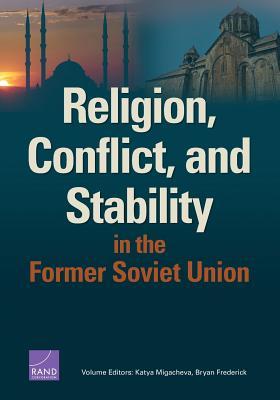
Religion, conflict, and stability in the former soviet union rand. Despite the growing importance of religion in countries in the former soviet union (fsu), the role of religion in conflicts in the region is not well understood. This volume of essays by international scholars and policy experts finds that while religion has not been the source of conflict in the fsu, it has sometimes sustained or intensified it as states and nonstate groups increasingly rely on religion to mobilize their.
Susan hayward is a senior program officer in usip's religion and peacemaking program. Her work engages religious actors and factors in global conflict zones,.
Te effect of religious factors on politics has emerged as a key issue in political inquiries since the end of the cold war and the rise of religious terrorism.
Religious conflict: definitions, problems and theoretical approaches previously thought to be eurocentric and invalid outside of a christian context. ²⁴ in their contribution langer and his co-author, udo simon, review previous criticisms and theorise about the applicability of categories of right and wrong belief as analytical tools.
In recent times, ghana’s image as an island of peace and stability has come under threat as a result of frequent disputes and conflicts between adherents of ga traditional religion and some christian churches over the annual ban on drumming and noise-making, imposed by the ga traditional council prior to the celebration of the ga traditional festival of “homowo” which literally.
Northern ireland protestant vs catholic conflict, christians ethnic cleansing of pogroms - marxists and feminists suggest religious belief systems are not beneficial for all in society, but are used to justify bourgeoisie/men mistreating the proletariat/women.
Religious freedom plays an important part in flourishing societies, including fostering political stability, economic development and women’s empowerment. Religious freedom is also instrumental in achieving sustainable, inclusive and equitable economic growth, creating greater opportunities for all, reducing inequalities, raising basic standards of living, fostering.
Download the report the middle east has long been one of the most unstable regions in the world, and there are no present prospects for change in the near future. This instability is the result of ongoing conflicts and tensions, and a variety of political tensions and divisions. It also, however, is the result of a wide variety of long-term pressures growing out of poor governance, corruption.
Religion and conflict transformation this course will introduce students to the theology, worldview, and practice of faith-based conflict transformation. It will prepare students to become leaders equipped with basic tools of conflict analysis in families, organizations, communities, and larger systems of oppression.
Variables government stability internal conflict religion in politics from business 111 at university of karachi, karachi.
May 22, 2017 with this background, the paper will then consider the extent to which religion and the law find themselves in conflict in australia before.
The role of religion in civil unrest and war: often, the media does not identify the precise causes of some of the conflicts around the world. Clashes are frequently described as being ethnic in origin, even though religion may have been a main cause.
The social-conflict approach is rooted in karl marx’s critique of capitalism. According to marx, in a capitalist society, religion plays a critical role in maintaining an unequal status quo, in which certain groups of people have radically more resources and power than other groups of people.
Explain the views of religion held by the conflict perspective. To life, (b) reinforcing social unity and stability, (c) serving as an agent of social control of behavior,.
While the divisive character of religious influences is widely appreciated and understood, their ob-verse contributions to resolving conflict are all but totally un-known. Over the past two years, the center for strategic and interna-.
Sectarianism and sectarian conflict in the middle east are often presented as having centuries-old religious and theological roots. It is often said that sectarianism runs so deep in the region.
Religion, conflict, and stability in the former soviet union [migacheva, katya, frederick, bryan] on amazon. Religion, conflict, and stability in the former soviet union.
Be useful for peace brokers operating in religiously charged conflicts, as well as for peacemaking based on religion.
Several religious factors pertinent to islam and judaism dictate the role of religion as the main factor in the conflict, notably including the sanctity of holy sites and the apocalyptic narratives of both religions, which are detrimental to any potential for lasting peace between the two sides.
Cambridge core - asian studies - religion and conflict in modern south asia.
Sunni v shia: why the conflict is more political than religious across the middle east, sectarianism has always been linked to the battle for power, resources and territory.
Federalism is a formidable mechanism for managing plural societies. However, ethno-religious conflicts have tended to impact the effectiveness of the federalist logic in nigeria.
The major hypotheses tested were that a positive correlation would exist between religious homogamy and marital stability and this relationship would be mediated by the level of marital conflict. That is to say, as marital conflict increases, marital stability should decrease.
The diversity of religions and ethnicities, together with the large difference in term of economics and society, has created the seeds for conflicts in southeast asia.
Italy as a unified nation did not exist until the late 19th century.
Festation of religious conflict that was rooted in conflict within religious denomina- ricerche di pedagogia e didattica – journal of theories and research in education 10, 1 (2015).
If so, because the religious difference is, by its nature, unresolvable, this would mean the violence now sweeping the middle east is intractable. If, however, other struggles over other identities are just as important to stability, then there is hope the conflict will subside or be subsumed into other less combustible and more manageable arenas.
Indeed, this issue of stability shows that the conflict in northern mali was in many ways precipitated by regional dynamics. Tuareg fighters who had helped prop up muammar qaddafi – and who returned, with their sophisticated weapons, to mali once the libyan regime fell – triggered the latest conflict in mali.
In the ottoman empire, there was religious tolerance because religion played a critical role in enhancing peace and stability. Religious leaders were respected because they were depended upon during calamities and disasters.
Sep 24, 2013 religion, however, can play an important role in peace-making and conflict prevention and resolution.
On the other hand, because globalization allows for daily contact, religion enters a circle of conflict in which religions become “more self-conscious of themselves as being world religions. ”[14] this essay argues that the relationship between religion and globalization is complex, one with new possibilities and furthering challenges.
Countries which have religion embedded into their constitutions in order to establish religious supremacy need to re consider its validity for achieving national peace and stability. Buddhism is a religious philosophy which advocates personal salvation through ethical and moral conduct based on reason.
In actuality, every religious tradition expresses “multi-vocality. ” as such, religion is highly “ambivalent” – it can inform social exclusion or cohesion under various conditions and within various contexts. The relationship between religion and social cohesion is deeply contextual and constantly evolving.
In the midst of the ongoing pandemic, the asu center for the study of religion and conflict expanded its outreach to address the needs of arizona’s most vulnerable, providing grants to nonprofits that work with at-risk, underserved and disproportionately impacted populations: refugees, asylum-seekers, daca recipients, low-income immigrant families and native american tribes.
First, it gives people a common set of beliefs and thus is an important agent of socialization (see chapter 4 socialization).
Feb 6, 2017 religion and how it is interpreted is playing an increasingly significant role in the conflicts across the middle east.
Nov 18, 2019 this usage is in contrast to the definitions proposed by scholars who have associated extremism exclusively with violent intergroup conflict.
66 religion, conflict, and stability in the former soviet union particularly uzbekistan, would serve as an incubator of radicalism. Unless the uzbek government changed its ways and opened its political system, radical islam would only grow larger and more menacing.
Religion is responsible for less than 7% of wars in all of history thus in most wars, particularly modern wars, the role of religion is far less the cause, and more often a way to negotiate peace.
Since the awakening of religion, wars have been fought in the name of different gods and goddesses. Still today most violent conflicts contain religious elements linked up with ethno-national, inter-state, economic, territorial, cultural and other issues.
With over 400 ethnic groups, distributed among the two major religions (christianity and islam), nigeria.
One of the advantages that i find consistently in religious actors is this sense of creative investment in peace.
Feb 4, 2021 british library for development studies: a big collection of economic and social development materials in europe, over half originates from.
Dec 19, 2019 new multidisciplinary research center at the university of helsinki provides in- depth research on the role of religions in conflicts and their.
The vast majority of the citizens of myanmar, a nation in southeast asia, are theravada buddhists. Nearly 90% of the country is buddhist, and most are members of the majority ethnic community known as burmans. Ethnic minorities—such as the chin, kachin, karin, and rohingya—include significant populations of christians and muslims.
Whether religion served to enhance social stability or created conflict. Malinowski and radcliffe-brown formulated their theories about religion together.
Usip has developed a series of action guides focused on religion and conflict analysis, mediation, reconciliation and gender-inclusive religious peacebuilding in collaboration with the network for religious and traditional peacemakers and the salam institute for peace and justice. These action guides provide a practical overview of the religious peacebuilding field and the role religion plays.
As a result, in collective violence, religion is never politically neutral, but has profound implications in generating or dissolving a conflict, thus influencing and affecting public and international policy. The main thesis is that religion, in its essence, does not engender violence, but it is a source for peace and stability.
There is no evidence to indicate that particular religious traditions are, by virtue of their theology, more prone to violence or more likely to lead to conflict or peace than others. However, attention can and should be paid to the underlying and enabling factors that make it possible for individuals, religious or political leaders, or communities to embrace a religious discourse, symbolism or institution to carry out or justify violence.
Xii religion, conflict, and stability in the former soviet union been destabilizing, as the greater infusion of religion in social and political life has exacerbated existing tensions and encumbered progress toward peace.
Feb 1, 2008 with so much emphasis on religion as a source of conflict, the role of religion as a force in peacemaking is usually overlooked.
The spate of terrorist attacks in the middle east, in bangladesh and the unfortunate, indiscriminate killings elsewhere in south asia have highlighted how misinterpretation of culture, rituals and religious beliefs are affecting peace and stability all over the world. It has also drawn attention to the politicisation of faith and its consequent repercussions.
The stability–instability paradox is an international relations theory regarding the effect of nuclear weapons and mutually assured destruction. It states that when two countries each have nuclear weapons, the probability of a direct war between them greatly decreases, but the probability of minor or indirect conflicts between them increases.
The role of religious groups in conflict and conflict resolution is at the centre of lively academic debate on the definition of religion,.
Explain how functionalists view the purpose of religion in society by one's peers; social cohesion: the bonds or “glue” that maintain stability in society. Approach as it provides social cohesion among the members of one party.
Religious, and racial groups does not make division and conflicts inevitable. And for that matter, empirical evidence shows that division and conflict are not dependent on the degree of diversity, as some of the most diverse countries (for example, switzerland, centre for research on inequality, human security and ethnicity, crise.
Feb 11, 2016 mauritanian islamic scholars and religious schools are important understanding mauritania's internal sources of conflict and their interactions.
Post Your Comments: