Full Download The Japanese House - Architecture and Life After 1945 - Pippo Ciorra file in PDF
Related searches:
The Japanese House: Architecture and Life After 1945 review
The Japanese House - Architecture and Life After 1945
The Japanese House: Architecture And Life After 1945 —Ala Champ
Review: The Japanese House Architecture and Life after 1945
The Japanese House Architecture and life after 1945 Floornature
The Japanese House: Architecture and Life after 1945 - JOVIS
The Japanese House: Architecture and Life after 1945 at Barbican
The Japanese House: Architecture and Life after 1945 - Designing
The Japanese House: Architecture and Life after 1945 — Go See Art
Angular Small House Is Inspired by Dutch and Japanese Design
The Japanese House: Architecture and Interiors: Black
The Japanese House: Architecture and Interiors by Alexandra Black
Lecture with Ken Tadashi - UCLA Architecture and Urban Design
Houses architecture and design in Japan ArchDaily
The Japanese House. Architecture & life after 1945 The Strength of
The Japanese House: Architecture and Interiors: Amazon.co.uk
The Japanese House : Architecture and Interiors by Noboru
Understanding Japan's 'scrap and build' design culture - CNN
This Home Beautifully Blends Traditional and Modern Japanese
The Japanese House: Architecture and Life - The Japan Foundation
The Japanese House, Architecture and interiors by Alexandra Black
Measure and Construction of the Japanese House RIBA Books
The Japan Foundation - The Japanese House: Architecture and
Barbican presents The Japanese House: Architecture and life
The Japanese House since 1945 at MAXXI Rome Wallpaper*
Japanese Homes: Design and ideas for modern living
Japanese design and architecture through the lens of Zen
[PDF Download] The Japanese House: Architecture and Interiors
The Japanese house combining privacy and passion for cars
211 4797 4711 2386 110 243 2189 3773 1642 2579 3385 3973 793 3024 4632 3189 928 2675 783 2671 2923 1865 2625 3501 4983
The design of this relatively modest house has a definite japanese influence. The carefully choreographed entry sequence, the material clarity, and the sculp.
This urban five-story house in japan was designed by architect kengo kuma and reflects his talent for combining geometric forms with natural materials and traditional japanese elements.
Where pre-modern japanese houses had engawa – verandah-like spaces with layers of seasonally adjustable screens and blinds – much of the japanese architecture we see today (at least from afar) has much less around the edges. Where we in new zealand undertake alterations, japan rebuilds.
Some people may see row houses as being too close to the neighbors for comfort, while others will just find them comfortable.
Traditional japanese architecture makes use of – and highlights – nature in the immediate area. In traditional japanese homes, almost every room opens to the outdoor garden, due to the wraparound veranda, or engawa, that serves as primary hallway to navigate the home.
Chashitsu (tea house or tea hut) is a small, often isolated small and rustic room/house used for japanese traditional tea ceremony gatherings. It maybe the only architecture whose evolution was about becoming smaller.
“the styles of shinto architecture, then are distinguished by their roofs, and the hierarchy of japanese building is fixed not by their height but by their roof design. ” the roof in a traditional japanese structure is made of heavy timbers placed at right angles, and the sheer weight of it is what keeps structure in place.
If you listen to the architect kengo kuma, the craze for kyosho jutaku, that distinctly japanese variant of the micro home, started in the thirteenth century, when the poet kamo no chomei penned.
The pure beauty of japanese architecture and design has inspired many of the world's top architects and designers. The grace and elegance of the japanese sensibility is reflected in both modern and traditional japanese homes, from their fluid floor plans to their use of natural materials.
Homes designed by renowned masters of japanese architecture such as kenzo tange, toyo ito, kazuyo sejima and shigeru ban and by important architects and young professionals from the land of the rising sun are presented in the japanese house, an exhibition under way at maxxi in rome co-produced with the japan foundation, london’s barbican centre and the national museum of modern art in tokyo, with an installation designed by atelier bow-wow divided into fourteen theme areas.
Japanese architecture has a different history than the architecture of the west in how it has been divided up, the materials that were available and of course the influences which changed how architecture looked over the centuries. Japanese architecture has an extensive history, like much of the art and culture of the japanese, and it is also well documented.
The japanese house: architecture and life after 1945 examines how japan dealt with this immediate crisis and presents many extraordinary, and internationally influential, modern and contemporary architectural designs built there over the past 70 years. Ryue nishizawa’s moriyama house, 2005, which is recreated in the exhibition’s entrance.
The japanese house: architecture and life after 1945, barbican art gallery, london. Tom morris is a freelance design writer and editor based in london.
Japanese houses, even today, always have a sunken space between the front door and the rest of the house. This area, which is considered dirty (and actually is), separates the home from the outside and is where shoes are placed (usually on a rack or in a shoebox) before entering.
Japanese house architecture – a unique urban design from the outside, this japanese house architecture is all organic. On the inside, the branching coral house is edgy and modern – not quite what you’d expect from the gentle curves that characterize its facade, but a pleasant surprise by all accounts.
Elements of classic japanese sukiya residential architecture, such as a silhouette defined by long, continuous eaves, are combined with contemporary touches, like a rooftop pool.
With over 200 stunning photographs, this japanese design and architecture book showcases some of hte most beautiful homes in japan.
Japanese houses today have to contend with unique factors that condition their design, from tiny plots in crowded urban contexts to ever-present seismic threats.
Japanese house: a tradition for contemporary architecture by engel, heinrich and a great selection of related books, art and collectibles available now at abebooks.
Urging, he wrote a book, the japanese house (1935), explaining japanese architecture to the west.
Japanese family life, customs, ceremonies, art, architecture and seasonal events are all highlighted in the fully functional 100-year-old house inside the museum.
The japanese house is introduced using a large collection of photographs, drawings, models and videos.
The japan house, which is located in the city centre of são paulo, opened in february 2017 as the first case of the “japan house project”. The architecture was designed by one of japan’s renowned architects, kengo kuma, in partnership with brazilian architecture company fgmf arquitetos.
Jul 1, 2020 the japanese house: the basic elements of traditional japanese residential architecture.
In this line, the house maintains a neutral palette, mixing earth tones with gray hues. The wooden slats and the warm shades of wood are typical of traditional japanese architecture and are consistent with not only the house’s but the cultures penchant for simplicity.
Mar 23, 2017 pictures and details of the japanese house: architecture and life after 1945 at barbican, london, march 23 – june 25, 2017 – contemporary.
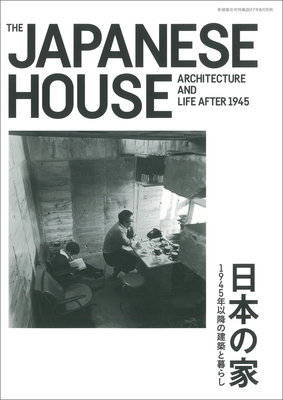
Oct 15, 2019 jutakutokushu 2017:08 special issue - the japanese house architecture and life after 1945 by shinkenchiku-sha, 9784786902871,.
The japanese house: architecture and life after 1945 exhibition focusing on post-war japanese residential architecture held in rome. The japan foundation holds an exhibition entitled the japanese house: architecture and life after 1945 from november 2016 to february 2017 in rome, italy.
The japanese house: architecture and life after 1945 at barbican art gallery is the first major uk exhibition to focus on japanese domestic architecture from the end of the second world war to today, a field which has consistently produced some of the most influential and extraordinary examples of modern and contemporary design.
Oct 28, 2020 a book written by ken tadashi oshima, international architecture in interwar japan.
The japanese house is a modest family house and studio in edinburgh designed and self built by konishi gaffney architects.
Traditional japanese architecture definitely has a distinct character and aesthetic. You may be familiar with the gently sloping roofs, the extensive use of wood, and the elegant simplicity.
Download the japanese house architecture and interiors full ebook free. Book the japanese house: architecture and interiors read full ebook.
From the cities of tokyo and kyoto to the rural countryside, you'll find great examples of japanese modernism, architecture and design. These japanese homes feature innovative storage options, tiny gardens and modern design. You'll find shoji screen and japanese soaking tubs, hot tubs.
Dec 12, 2017 old japanese houses relied on movable screens (shoji) and sliding doors ( fusuma) to divide and re-divide rooms as needed.
Aug 13, 2017 after very successful runs in rome and london, the japanese house: architecture and life after 1945, an exhibition of maquettes,.
In the japanese house, visitors could experience a day in the tokyo home of the enigmatic urban hermit, yasuo moriyama, designed by ryue nishizawa (sanaa), weaving in and out of the house’s ten individual, fully-furnished rooms and maze-like gardens.
Heinrich engel — the japanese house: a tradition for contemporary architecture.
Traditional japanese houses have unique architectural and interior features that are considered an important part of japan's history and culture. These old features are often included in new homes because many people still find them charming. Family homes were historically viewed as temporary and were reconstructed approximately every 20 years.
Japanese architecture (日本建築, nihon kenchiku) has been typified by wooden structures, elevated slightly off the ground, with tiled or thatched roofs. Sliding doors were used in place of walls, allowing the internal configuration of a space to be customized for different occasions.
Jun 16, 2020 japanese-inspired house design has drawn global attention for decades thanks to the ways it brings tranquility of the zen philosophy.
Designed by ryue nishizawa architects, the moriyama house is a minimal, modern interpretation of the japanese domestic and is an entire house that consists of 10 individual, white blocks, each block is a room. A single block could be a bathroom or a bedroom or a small maisonette.
Elements of this five-room house were created in japan and shipped to pasadena around 1904 for a commercial garden. Huntington in 1911, the structure is comprised of several japanese woods, with paneled doors to the outside can be left open or closed to allow inhabitants to enjoy the gardens around them.
The japan foundation holds an exhibition entitled the japanese house: architecture and life after 1945from november 2016 to february 2017 in rome, italy.
Japanese architecture has traditionally been typified by wooden structures, elevated slightly off the ground, with tiled or thatched roofs. Sliding doors (fusuma) were used in place of walls, allowing the internal configuration of a space to be customized for different occasions.
This is the japanese house: architecture and life after 1945, at barbican. The centrepiece is a full scale reproduction of a japanese house made.
Download the japanese house: a tradition for contemporary architecture pdf full ebook free slideshare uses cookies to improve functionality and performance, and to provide you with relevant advertising.
Mar 31, 2017 if nothing else they make flesh the sheer imaginative fertility that japanese architects bring to the design of houses.
A study of japanese architectural form, system and component applied to modern living and contemporary homes.
Japanese architecture practice capd have completed umi – a simple, white house in tokushima prefecture overlooking the sea with a large, deep-set window and terrace.
Philip jodidio is renowned the world over as a writer on architecture. He is the author of numerous books, including monographs on tadao ando, santiago.
Japanese culture is known to praise efficiency, which comes forth in many different ways. One of the most obvious, that these photos explore, is the way in which a traditional japanese house is situated. Without much square footage, this largely wood-paneled home manages to make space for every essential part of a house, without wasting any area.
This system, as the architecture firm emphasizes, has made the soil stabilization unnecessary, which has resulted in significant savings in the construction budget. The living room-kitchen area overlooks the glass wall of the garage, keeping the white maserati in plain sight, and is the center of the whole house, around which all the other.
The traditional house of ancient and medieval japan (1185-1606 ce) is one of the most distinctive contributions that country has made to world architecture. While the rich and powerful might have lived in castles and villas, and the poor lived in rustic country houses or cramped suburban quarters, a large number of medieval japanese in-between lived in what became the quintessential japanese home.
The japanese house: architecture and life after 1945” is the first major uk exhibition to focus on japanese domestic architecture from the end of the second.
And many western-style homes in japan contain a single japanese-style room with a tatami floor. Elements of traditional japanese house design, long an inspiration for western architects, can be found throughout the world.
We love passive house or passivhaus, the incredibly efficient building standard that sets an absolute limit on how much energy one can use per square foot or how much air is allowed to leak.
Marsh, the japanese house at the huntington library, art collections, and botanical gardens was relocated to henry huntington’s ranch in 1911.
Exhibition focusing on post-war japanese residential architecture held in rome.
One houses a traditional, japanese room with a double-height living room and second-floor loft. The other contains two bedrooms, two bathrooms, and the open kitchen and dining room. The plan brings plenty of natural light and ventilation into the house, even though it is a long and narrow building, says saito.
Nov 17, 2016 exploring one of the main obsessions of japanese architecture, the single family house, the exhibition displays the evolution of architectural.
Japanese architecture, buildings japan, architect, tokyo property, news, design, photos. E-architect select interesting design-led japanese architecture.
Japanese architecture has an extensive history, like much of the art and culture of the japanese, and it is also well documented. The architecture in japan has long been heavily influenced by china, but it has also gone its separate ways in some respects, such as the availability of materials and the function of the buildings.
Located in tokyo, japan, this unusual and eye-catching structure was designed and built by hiroyuki shinozaki architecture. It’s a tree house and it has a� architecture, bird, building, david jameson architect, fujimori, garden, homes, plans, roof, shed, takashi kobayashi, tea room, teahouse, traditional, traditional japanese architecture, wood.
The style that is the basis for japanese homes today, which usually have a long hallway through the middle of the house with rooms on each side, is said to combine foreign culture with the style of house preferred by the samurai.
In april 2017, designing buildings wiki attended a major first-of-its-kind uk exhibition at london's barbican centre.
Japanese characters: では、また。 notes: ja mata (じゃ、また) or ja ne (じゃね) can be used in informal situations.
The shofuso house was built in 1953 in nagoya, japan using traditional building materials and techniques. It was disassembled and reconstructed in the sculpture garden at the museum of modern art in new york for a 1954 exhibition on japanese architecture.
Post Your Comments: