Read The Nature of Soviet Power: An Arctic Environmental History (Studies in Environment and History) - Andy Bruno | PDF
Related searches:
Nature and Industry in Russia
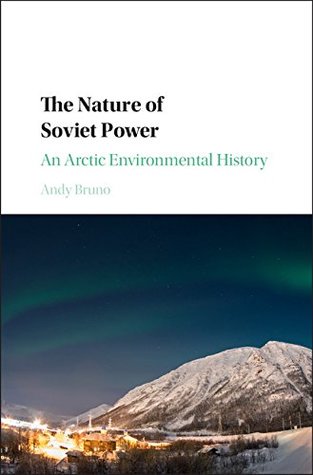
The Nature of Soviet Power: An Arctic Environmental History (Studies in Environment and History)
Studies in Environment and History Ser.: The Nature of Soviet
NATO in Context: Geopolitics and the Problem of Russian Power
Stolberg on McCannon, 'Red Arctic: Polar Exploration and the Myth
Russia's Arctic Development: Problems and Priorities - GeoHistory
Russia's Ambitions in the Arctic and their Implications for NATO in
Russia - Government and society Britannica
Soviet Power and the Destruction of Nature
Industry, War and Stalin's Battle for Resources: The Arctic
The power of nature: polar bears and street art in Arctic Canada
Conquering Nature in Sakhalin and the Arctic - SRB Podcast
2495 2552 1163 1758 794 1751 2669 1822 4044 3584 1114 2318 3768 214 4267 4521 1435 4520 4390 3647 3392 672
The poetics of peat in soviet literary and visual culture, 1918-1959. Slavic review the nature of soviet power: an arctic environmental history.
These are just some of the questions motivating historian andy bruno's book, the nature of soviet power: an arctic environmental history (cambridge university press, 2016). The book is the first to consider nature and the environment as actor and participant, rather than passive subject, in soviet history.
In 2018, rosatom, the state nuclear power entity was designated as the manager of shipping along the nsr and given a key role in developing offshore arctic infrastructure. 47 in addition, it has been charged with building and overseeing the nuclear icebreaker fleet, managing emergency response in the russian arctic, and developing communication and navigation infrastructure along the route. 48 rosatom’s growing role in the arctic has enhanced its political clout, increased its financing.
Jun 4, 2020 more than 20000 tons spilled in a remote arctic region, prompting russian president vladimir putin to declare a state of emergency.
Dec 2, 2019 as extraction and pipeline technology opened up soviet gas fields in the 1960s, and the an environmental reckoning in the high arctic.
In front of us is a colossal polar bear stretching on its hind legs to the peaked roof of a two-storey building. It wears a passive expression, yet its forepaws are as big as cars, extended as if ready to swipe.
Book reviews: the nature of soviet power: an arctic environmental history. According to bruno, scholars have tended to explain soviet environmental.
An arctic environmental history, the nature of soviet power, andy bruno, cambridge university press. Des milliers de livres avec la livraison chez vous en 1 jour ou en magasin avec -5% de réduction�.
Note, review of: the nature of soviet power: an arctic environmental history / by andy.
Dec 27, 2019 russia's coastline accounts for 53% of arctic ocean coastline and the rise in russian nationalist sentiment during his two decades in power.
Efforts to harness the arctic’s geostrategic potential have long been the ambition of soviet and russian leaders. Drawing upon early russian exploration and stalin’s “red arctic” propaganda, russian president vladimir putin personally identifies with russia’s arctic ambitions and seeks to exploit the arctic narrative of man conquering nature as a distinctive feature of modern russian nationalism.
There are two major transoceanic routes in the arctic: the northern sea route (hereinafter nsr – auth. ) and the northwest passage, which connects the atlantic and pacific oceans. The richness of the arctic latitudes is almost completely offset by the climatic conditions of this region.
History professor andy bruno has a new book out that sheds light on the experiences of soviets with the arctic environment. During a reception celebrating its publication, bruno will deliver a talk on the book, titled “the nature of soviet power: an arctic environmental history” (cambridge university press).
The stalinist regime never succeeded in pressing nature into the socialist planned economy. How did soviet power come to the arctic? during the revolution.
He is the author of the nature of soviet power: an arctic environmental history. Opening commentary: i want to draw listeners’ attention to two recent stories in russia that concern local social and economic struggles in the regions. The first is about a tractor protest staged by farmers from krasnodar.
Download citation the nature of soviet power: an arctic environmental history during the twentieth century, the soviet union turned the kola peninsula in the northwest corner of the country.
History professor andy bruno has a new book out that sheds light on the experiences of soviets with the arctic environment. During a reception celebrating its publication, bruno will deliver a talk on the book, titled “ the nature of soviet power: an arctic environmental history ” (cambridge university press).
On october 1, 1987, soviet general secretary mikhail gorbachev, delivered the murmansk initiative stating six goals of the soviet union's arctic foreign policy: establish a nuclear-free zone in northern europe; reduce military activity in the baltic, northern, norwegian and greenland seas; cooperate on resource development; form an international conference on arctic scientific.
Dec 9, 2019 now you can visit it to see the soviet union frozen in time. The ideal soviet utopia, mostly to show the ussr's power off to the rest of the world.
The structure of the new russian government differed significantly from that of the former soviet republic.
And soviet ideology, the united states' willingness to put ideology aside in these instances suggests that relative power.
He applied the “page 99 test” to his new book, the nature of soviet power: an arctic environmental history, and reported the following: in the twentieth century the soviet union transformed a sparsely-populated territory called the kola peninsula into one of the most industrialized and environmentally-damaged parts of the global arctic.
The nature of soviet power sees soviet environmental history as part of the global pursuit for unending economic growth among.
Historical lessons of soviet cold war military planning might be helpful looking ahead to the region’s future. We now know the nature of russian a2/ad russia is a legitimate arctic power.
He wanted to establish soviet power over native siberians and control the economic the arctic region, it is important to note the nature of climate change that.
andy bruno, the nature of soviet power: an arctic environmental history; suivre cet auteur stéphane frioux; in cahiers du monde russe volume 58, issue 4,.
The american historical review, volume 122, issue 4, october 2017, pages 1347–1348,.
Andy bruno, the nature of soviet power: an arctic environmental history.
Apr 11, 2016 while soviet power remade nature, nature also remade soviet power. Populated, industrialized, militarized, and polluted parts of the arctic.
For us, soviet power has been the ultimate measure and the central threat, by strange anonymous sources of insecurity, many of them economic in nature.
The nature of soviet power an arctic environmental history during the twentieth century, the soviet union turned the kola peninsula in the northwest corner of the country into one of the most populated, industrialized, militarized, and polluted parts of the arctic.
Therefore, the russian settlements on svalbard, inherited from the soviet union, can be examined in the framework of power politics. The settlements are presented as a colony, something that only great powers can invest in and maintain, and serve to project russian arctic might outside of the mainland.
Empire of extinction: nature and natural history in the russian north pacific, the nature of soviet power: an arctic environmental history, by andy bruno.
In contrast with the internationally widespread stereotype of russia as a revisionist power in the arctic, its future actions are more likely to be fairly pragmatic in nature. On the one hand, such an approach will aim to protect russia’s legitimate economic and political interests in the high north.
5 million square kilometers, including the north pole, arctic ocean, and extensive inland areas. While the north pole and a substantial portion of the arctic ocean remain unclaimed by any country, canada, norway, russia, denmark (via greenland), and the united states all have territorial claims within the arctic region.
February 19, 2021 arctic, soviet power and the destruction of nature.
With its arctic partners uninterested in russia's power games. Fulfilling in 2007, a russian arctic expedition sent bathyscaphs, one of them nature preserves.
L'histoire environnementale du monde russe aux xixe et xxe siècles est un champ très dynamique.
Russian military strategy: projection of power and capacities of action russian people and the imperial nature of russia owe much to geography.
The nature of soviet power: an arctic environmental history: bruno, andy: amazon.
Jun 28, 2019 russia's military posture in the arctic: managing hard power in a 'low tension' military build-up in the russian arctic and the kremlin's intentions are, at least for now, intentions are, at least.
The arctic is currently the setting for a high stakes power play between the liberal, western order and a revisionist russian state, that desperately seeks great power, claiming nearly half the arctic in a ploy for energy, power, and ultimately prestige.
“soviet environment, capitalist world,” review of andy bruno's the nature of soviet power: an arctic.
This russian state nature reserve compromises most of the remote islands of the kara sea, some coastline and parts of the severnaya zemlya archipelago.
'the nature of soviet power is an ambitious and thought-provoking book on an important topic, especially in light of the growing importance of polar regions in the era of climate change. The research presented is remarkably erudite, drawing upon an astonishing breadth of primary and secondary sources.
During the twentieth century, the soviet union turned the kola peninsula in the northwest corner of the country into one of the most populated, industrialized, militarized, and polluted parts of the arctic.
Andy bruno’s well-researched and convincing book argues that while the soviet union worked throughout its seventy-five-year tenure to develop its arctic lands into productive socialist spaces, powerful natural elements in these arctic landscapes were simultaneously at work shaping soviet identity. Nature forced the state to modify and reassess its relationship with arctic landscapes.
During the twentieth century, the soviet union turned the kola peninsula in the northwest corner of the country into one of the most populated, industrialized, militarized, and polluted parts of the arctic. This transformation suggests, above all, that environmental relations fundamentally shaped.
During the twentieth century, the soviet union turned the kola peninsula in the northwest corner of the country into one of the most populated, industrialized, militarized, and polluted parts of the arctic. This transformation suggests, above all, that environmental relations fundamentally shaped the soviet experience.
Jun 4, 2020 a power plant manager is arrested after 20000 tonnes of oil polluted an arctic river. Russian minister for emergencies yevgeny zinichev told mr putin # питер #nature #moscow #рыбалка #fishing #fish #спиннинг #sos.
Post Your Comments: