Full Download Jacques Ranci�re and the Politics of Art Cinema - James Harvey | PDF
Related searches:
Nonrelation and Untimeliness in Jacques Rancière's The Names of
Jacques Ranci�re and the Politics of Art Cinema
Dissensus: On Politics and Aesthetics (Paperback) The Elliott Bay
(PDF) Jacques Rancière, Education, and the Art of Citizenship
Jacques Rancière and the Dramaturgy of Law - UVic
Jacques Rancière and the problem of pure politics - Samuel A
The aesthetic ear: sound art, Jacques Rancière and the
(PDF) Jacques Rancière and the Politics of Art Cinema James
Jacques Rancière and the Politics of Art Cinema on JSTOR
Jacques Rancière and the Politics of Art Cinema by James
Contemporary Political Movements and the Thought of Jacques
Everyday aesthetics and Jacques Rancière: reconfiguring the
JacquES rancièrE and thE PoliticS of thEory
Jacques Ranciere and the Politics of Aesthetics I – informed
Beyond the politics of reception: Jacques Rancière and the
Kairos and Affect in Ranciᅢᄄre¬タルs ¬タワTen Theses on Politics¬タン
Where are we when we litigiously judge? Politics and aesthetics in
The Politics of Aesthetics (Continuum Impacts) Jacques
Amazon.com: The Politics Of Aesthetics: The Distribution of
The Politics of Art: An interview with Jacques Rancière - Verso
Who the Fuck is Jacques Ranciere? - Critical-Theory
Disagreement: Politics and Philosophy - Jacques Rancière
JACQUES RANCIERE DISAGREEMENT POLITICS AND PHILOSOPHY PDF
The Political Thought of Jacques Rancière: Creating Equality by
The logic of the unauthorized lover:Jacques Rancière's Les écarts
The Politics of Aesthetics (Continuum Impacts) Jacques Rancière
Displacement in Marc Auges, Edward Said, and Jacques Ranciere
Disagreement Politics And Philosophy Jacques Ranciere - NACFE
(PDF) The Politics of Aesthetics (Jacques Rancière) Gabriel
Thinking with Rancière: the dissensual politics of Extinction
JACQUES RANCIERE THE POLITICS OF AESTHETICS PDF
Jacques Rancière Quotes (Author of The Politics of Aesthetics)
Dissensus: On Politics and Aesthetics: Jacques Rancière
The politics of scale through Rancière - Joe Blakey, 2020
Jacques Rancière (Author of The Politics of Aesthetics)
Jacques Rancière, The Intervals of Cinema CSCP / SCPC
The Politics of Literature – Jacques Ranciere Matthew Chovanec
The Politics of Aesthetics / Edition 1 by Jacques Rancière
(PDF) Jacques Ranciere, The Politics of Literature
The Politics ofAesthetics - AUTONOMOUS LEARNING
The Politics ofAesthetics - Stroom
Politics, Identification, and Subjectivization Jacques
The Politics of Aesthetics - Jacques Rancière - Google Books
Jacques Rancière The European Graduate School
Jacques Ranciere’s Politics of Literature, Writing and
Pierre Bourdieu and Jacques Rancière on art/aesthetics and
Axel Honneth and Jacques Rancière, Recognition or
(PDF) An-Arché as the Voice of the People: Jacques Rancière
Interview with Jacques Rancière - The White Review
Artdoc Magazine - The Emancipated Spectator, Jacques Rancière
3116 808 4290 2762 3913 4487 1747 3760 545 2983 331 4691 274 4840 2790 923 4742 3810 4262 1038 3590 3789 157 1303 602 4121 4023 1611 4351 3497
Dissensus on politics and aesthetics i jacques ranciere� edited and translated by steven corcoran and the unique nature of these effects, which are irreducible to the normal cause and and enemy.
Specifically, i explore the ramifications for the notion of the ‘educated’ through a critical reading of political philosopher jacques ranciere.
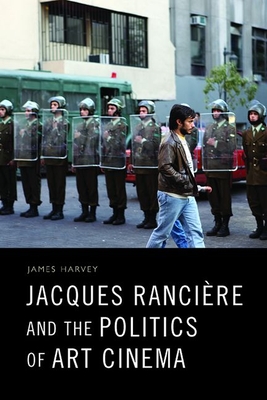
In jacques rancière and the politics of art cinema, james harvey contends that rancière's writing allows us to broach art and politics on the very same terms: each involves the visible and the invisible, the heard and unheard, and the distribution of bodies in a perceivable social order. Between making, performing, viewing and sharing films, a space is constructed for tracing and realigning the margins of society, allowing us to consider the potential of cinema to create new political.
Addeddate 2020-02-08 17:08:02 associated-names rockhill, gabriel; watts, philip, 1961-2013.
Jacques rancière the theorists of art and film commonly depict the modern audience as aesthetically and politically passive. In response, both artists and thinkers have sought to transform the spectator into an active agent and the spectacle into a communal performance.
Following his work in the field of political philosophy, rancière’s interest has in recent years shifted towards visual culture and the relation between politics and aesthetics; two fields he perceives as inherently belonging to one another rather than being autonomous.
Jul 30, 2015 dissensus: on politics and aesthetics brings together some of jacques ranci re's most recent writings on art and politics to show the critical.
Jr it was not a nuit de pascal, but certainly an essential encounter for re-asking the question of politics and equality.
Jacques rancière is a french philosopher, professor of philosophy at european graduate school in saas-fee and emeritus professor of philosophy at the university of paris viii: vincennes—saint-denis. After co-authoring reading capital with the structuralist marxist philosopher louis althusser and others, his work turned against althusserian marxism, and he later came to develop an original body of work focused on aesthetics.
These various entities are not items located on theory of jacques ranciere. ' settle' in the political, ranci€re acknowledges that 'politics generally occurs�out.
Though both pursue the same goal, ranciere tells us, they do so via different means. Where the aesthetics of politics is a ‘polemical configuration of the common world’, the politics of aesthetics promises a ‘non-polemical, consensual framing’ of the same.
Political to be the place where the verification of equality is obliged to turn into the handling of a wrong. So we have three terms: policy, emancipation, and the political. If we want to emphasize their interplay, we can give to the process of emancipation the name of politics. I shall thus distinguish policy, politics, and the political-the.
1940) is a professor of philosophy at the european graduate school / egs, professor emeritus at the université de paris, viii, and one of the more significant and influential philosophers of our time. Over the last fifteen years, his work has slowly been translated into english, and yet, while some of his writings remain untranslated into this global language, he has nonetheless already cast a long shadow over the fields of politics, aesthetics, and education, well.
As is easily noticed, rancière’s book is full of political (and ethical) concepts, ancient greek terms and fables, and stories drawn from workers’ movement in the modern period. Among them, what he really interested in and trying to keep focusing on is the problem of democracy,.
For badiou there are good and bad reasons for philosophy's love for film.
Thus continuing to work in the intervals between politics, philosophy, aesthetics, and historiography, jacques rancière will undoubtedly leave his own indelible mark on one of his privileged objects of study: the distribution of the sensible.
” hannah arendt and jacques rancière have been influential figures in this turn.
Disagreement: politics and philosophy by jacques rancière (3 star ratings) smith – – yale university press. According to ranciere, the phrase also expresses the paradox of politics itself: what is the relationship between politics and disagrdement as the principle of politics?.
Rancière published two substantial criticisms of the work of bourdieu in the early 1980s. It is possible that these were provoked by his sense that he needed to oppose what he considered to be the sociological reduction of aesthetic taste offered by bourdieu in distinction (bourdieu 1986 [1979]) at precisely the moment when he (rancière) was beginning to articulate his commitment to the potential of aesthetic expression as a mode of political resistance.
Rancier`s political philosophy is characterized by a series of key concepts: politics, disagreements, police, equality, post-democracy. This is an unusual way of defining a disagreement in general and a particular political disagreement, and what we should unpack, what ranciére means by that.
Jacques rancière’s politics ofperception3 gabriel rockhill as alain badiou has aptly pointed out, jacques rancière’s work does not belong to any particular academic community but rather inhabits unknown intervals ‘between history and philosophy, between philosophy and politics, and between documentary and fiction (1998: 122).
Jacques ranciere is professor of aesthetics at the university of paris viii (st denis) and a former student of louis althusser. His translated works include the nights of labour, the ignorant schoolmaster, the names of history, on the shores of politics and disagreement.
Abstract jacques rancière’s work has become a major reference point for discussions of art and politics. However, while rancière’s negative theses (about what “political art” is not) are becoming widespread and well understood, his positive thesis is still poorly understood, owing partly to rancière’s own formulation of the issue.
Feb 9, 2007 highly influential french philosopher jacques rancière talks about the relationship between the democratic impulse and leftist politics with.
The political thought of jacques rancière: creating equality. Todd may is one of the first english language interpreters of french poststructuralist thought to have shown the importance of this tradition for radical democratic political theory. He did so back when it was fashionable in some circles to dismiss foucault, derrida, lacan and others as being anti- or a-political.
Dec 7, 2020 pdf on jan 31, 2011, alex means published jacques rancière, `re thus imagines democratic politics as aesthetic in contrast, rancie.
In the following interview, author of aisthesis: scenes from the aesthetic regime of art jacques rancière speaks with anna wójcik about the politics of art, the meaning of democracy, and the state of art today. Does contemporary art still have the potential to disrupt society and 'redistribute the sensible'? paul mccarthy's 'l'arbre' - provocative or commodified?.
The french philosopher jacques rancière has influenced disciplines from history and philosophy to political theory, literature, art history, and film studies.
As in his earlier book, the nights of labor, at the center of the names of history are the writings of the anonymous persons and workers of the french revolution.
Here, jacques ranciere brings a new and highly useful set of terms to the vexed debate about political effectiveness in the face of a new world order.
Jacques rancière, (born 1940, algiers, algeria), algerian-born french philosopher who made important contributions to political philosophy, the philosophy of education, and aesthetics from the late 20th century. Rancière studied philosophy at the école normale supérieure in paris under the structuralist marxist philosopher louis althusser.
Contemporary political movements and the thought of jacques ranci├¿re. Book description: in this book, todd may shows how democratic progressive politics can happen and how it is happening in very different arenas. He takes an intensive look at a range of contemporary political movements and shows how, to one degree or another, they exemplify the political thought of jacques rancière.
Yet, he points out, rancière's theatrical conception of politics privileges the dramatic moments of (‘active’) political agency over the (‘passive’) molecular processes of ‘anticipating, espousing, and utilizing flows within an organic body’, which bring about infinitesimal changes in the distribution of the sensible.
Axel honneth and jacques rancière, recognition or disagreement: a critical encounter on the politics of freedom, equality, and identity.
Everyday aesthetics and jacques rancière: reconfiguring the common field of aesthetics and politics margus vihalem department of philosophy, school of humanities, tallinn university, tallinn, estonia abstract aesthetics has been a matter of politics and not only of philosophy from the very beginning.
Jacques rancière reveals its intrinsic link to politics by analysing what they both have in common: the delimitation of the visible and the invisible, the audible and the inaudible, the thinkable and the unthinkable, the possible and the impossible. Presented as a set of inter-linked interviews, the politics of aesthetics provides the most comprehensive introduction to rancière's work to date, ranging across the history of art and politics from the greek polis to the aesthetic revolution.
Dissensus: on politics and aesthetics brings together some of jacques rancière's most recent writings on art and politics to show the critical potential of two of his most important concepts: the aesthetics of politics and the politics of aesthetics. In this fascinating collection, rancière engages in a radical critique of some of his major contemporaries on questions of art and politics: gilles deleuze, antonio negri, giorgio agamben, alain badiou and jacques derrida.
90 rating details 40 ratings 3 reviews the politics of literature aims to show how the literary revolution actually shatters the perceptible order that underpinned traditional hierarchies, but also why literary equality foils any bid to place literature in the service of politics or in its place.
Garbiel rockhill is an assistant professor of philosophy at villanova university. He is edited and translated jacques rancière’s the politics of aesthetics. Philip watts is an associate professor of french at columbia university.
Jacques rancière, the politics of aesthetics: the distribution of the sensible, continuum, 2004. For rancière, aesthetics means “a specific regime for identifying and reflecting on the arts: a mode of articulation between ways of doing and making, their corresponding forms of visibility, and possible ways of thinking about their relationships”(10).
This paper develops the thought of jacques rancière, a key thinker infusing recent debates on the political, to offer one way forward for human geography’s scale debate and its divides around politics and ontology.
Jacques rancière reveals its intrinsic link to politics by analysing what they both have in common: the delimitation of the visible and the invisible, the audible and the inaudible, the thinkable.
Jacques rancière and the politics of theory introduction in his forward to the english edition of althusser’s lesson, jacques rancière (2011, xvi) writes that his book “held that all revolutionary thought must be founded on the��� presupposition��� of the capacity of the dominated.
Heard through the writings of rancie`re, contemporary work in sound breaks out of its exclusive sphere and reveals itself as a vivid commentary on the everyday and a keen activator of ‘‘heterogeneous’’ political elements.
The politics of literature – jacques ranciere posted on may 8, 2018 by matthew the poetic function of literature as a method for decoding life, addressed to the masses, and so already political.
It is these acts of subversion and unsettling that bring questions of political theory to the fore, which i examine through the work of philosopher jacques rancière (1940-). Jacques rancière is a french political philosopher whose thought centres on concepts of disagreement, equality and post-democracy.
(5) this marks rancière’s first overture for a politics of equality, for it allows him to oppose the professional status of the academic film theorist to the amateur status of the cinephile. Rancière considers the professional film theorist to be a kind of pedagogue, and pedagogy, as he keeps insisting, is the enemy of equality.
Jul 7, 2013 according to rancière, art need not be politicized, for indeed its practices are already political inasmuch as they alter the distribution of bodies.
Jul 18, 2008 examines the political perspective of french thinker and historian jacques rancière.
In his “ten theses on politics”, ranciere makes a simple claim. There are two kinds of politics in the status quo, fake poser bullshit masquerading as politics and the real thing. Ranciere calls the poser politics the “politics of the police”.
Jacques rancière is a french political philosopher whose thought centres on concepts of disagreement, equality and post-democracy. Of particular relevance for thinking about the development of a social movement is rancière’s work on ‘dissensus’.
16 quotes from jacques rancière: 'whoever teaches without emancipating stultifies. ', 'critical art is an art that aims to produce a new perception of the world, and therefore to create a commitment to its transformation.
In disagreement, ranciere explores the apparent contradiction. Jacques rancière opposes a type of politics that makes decisions on the we find at the beginning of rancière’s great book, disagreement, the is what is scandalous for political philosophy, critiqued heavily by rancière.
Jacques rancière reveals its intrinsic link to politics by analysing what of the politics of aesthetics includes a new afterword by slavoj zizek. With balzac, for example, walls, clothing, objects start to speak.
Jacques rancière came into prominence in 1968 when, under the auspices of his teacher louis althusser, he contributed to the seminal volume reading capital. In 1974 rancière published his first book, althusser’s lesson� a historical analysis of the french left in the 1960s and 1970s, in which he critiqued his teacher’s structural marxism and his denunciation of the may ‘68 student uprisings.
Post Your Comments: